Tuesday, April 8, 2025

Title: The Mirror Code


         In the heart of Kolkata, tucked between a forgotten alley and a crumbling bookstore, stood an old mirror shop. It was run by an eccentric man known only as Mr. Ghosh, who rarely spoke and never aged. Locals whispered that his mirrors were cursed, that people who stared into them too long saw things not meant for this world.

Anirban, a 28-year-old software engineer, didn’t believe in such nonsense. He had logic, algorithms, and Python scripts on his side. But when his younger sister, Tuhina, went missing after visiting the mirror shop, something inside him cracked. The last footage on CCTV showed her entering the shop. She never came out.

Police investigations went nowhere. Mr. Ghosh said she “left in a different way.” That was it. No one could press him further. Desperate, Anirban decided to investigate the shop himself.

It was raining when he stepped inside.

The shop was dim, filled with tall antique mirrors, each framed intricately with bronze, silver, or wood. They lined the walls like silent sentinels. Mr. Ghosh was polishing a square mirror with unusual symbols carved into its edges. He looked up.

“Looking for someone, aren’t you?” the old man asked, voice dry like crumpled paper.

Anirban tried to steady his voice. “My sister. Tuhina. She came here two weeks ago.”

Mr. Ghosh nodded slowly. “She crossed over.”

Anirban scoffed, though his stomach twisted. “Crossed over?”

“To the mirror side. A parallel world.”

Anirban laughed, but it came out hollow. “There’s no such thing.”

Mr. Ghosh stepped aside, revealing a mirror that shimmered oddly, as if reflecting not this room, but a different one—same layout, different colors, and in the reflection, no Mr. Ghosh, no Anirban—only dust, decay, and silence.

“This mirror,” Mr. Ghosh said, “is a gateway. Every mirror in this shop is. But this one—this is the only one that opens both ways.”

“And Tuhina?” Anirban whispered.

“She’s trapped there. But the passage closes every lunar cycle. Tonight’s the last chance.”

Against every shred of logic, Anirban stepped forward. Mr. Ghosh handed him a brass pendant with a clock inside.

“This will tick only in your world. You have one hour. Beyond that, you stay there. Forever.”

The moment Anirban stepped through, he felt like falling through thick air. The world he landed in looked like Kolkata—but without people. Empty cars, flickering traffic lights, and silence. Chilling, unbroken silence.

He ran through the streets calling Tuhina’s name. No answer. As he passed buildings, he realized this city mirrored his own exactly, but aged, broken, haunted.

And then he heard a voice. Faint. Crying.

He followed it to their childhood home. It stood eerily intact. He pushed the door open. Inside, everything was identical—except the photos on the walls. In every one, his face was crossed out with red ink.

He climbed to the attic. The crying grew louder.

He found her there—Tuhina, pale and thinner, holding a cracked mirror in her hands.

“Anirban?” she gasped. “Is it really you?”

He nodded and rushed to her.

“I was trying to find you,” she sobbed. “I saw a boy in the mirror… I thought he needed help. And then, I couldn’t get back.”

He took her hand. “We have to go. Now.”

They ran through the streets, retracing his steps, but the portal mirror was gone. In its place stood a tall version of Mr. Ghosh—except younger, with black eyes that seemed to devour light.

“You are not welcome here,” the figure said.

Anirban stood firm. “We’re going home.”

“You broke the balance,” the mirror-figure hissed. “Only one can leave now.”

“What do you mean?”

“One soul in. One soul out.”

Anirban looked at the ticking pendant. Ten minutes left.

He turned to Tuhina. “You’re going.”

“No,” she cried. “Not without you.”

He shook his head. “I came to save you. That’s what I’ll do.”

He shoved the pendant into her hand, whispered, “Go,” and pushed her through the mirror that flickered to life for a split second.

Tuhina fell back into the real world, gasping, landing hard on the mirror shop’s floor.

Mr. Ghosh caught her and smiled. “He made the right choice.”

Tears streamed down her face. “Send me back. Please. I can’t leave him there!”

Mr. Ghosh shook his head slowly. “The mirror is closed. The balance is kept.”

Behind him, the shimmering mirror went dark.

In the silent parallel world, Anirban stood alone, the streets empty once more.

But as he turned, he saw a flicker in another mirror—his reflection, smiling back.

Except… it wasn’t him.

It was darker, twisted… watching.

And it whispered, “Welcome home.”


---

The mirror never lies. It only shows the world we fear to see.

Thursday, April 3, 2025

A Love In Train

            The rhythmic chugging of the train filled the night air as Ananya settled into her seat by the window. The train was bound for Mumbai, a long sixteen-hour journey from Kolkata. She loved train journeys—the hum of movement, the stories woven by strangers, the endless landscapes that unraveled like poetry outside the window.

Lost in her thoughts, she didn't notice the young man taking the seat across from her until he spoke.

"You seem to enjoy looking out more than looking around."

Startled, Ananya turned and met his gaze. He had deep brown eyes, curious yet calm. His slightly disheveled hair and a book resting on his lap gave him a scholarly air.

"It's peaceful," she replied. "Unlike the chaos inside."

He chuckled. "That’s one way to put it. But I’d argue the chaos inside is just as interesting."

Ananya smiled. "And you are?"

"Rudra," he said, extending his hand.

"Ananya."

They shook hands, and just like that, an invisible thread seemed to tie them together.

The conversation started light, about books and travel. Rudra was an economist, she was a journalist. They found common ground in their love for knowledge, for the thrill of chasing stories and unraveling the layers of human existence.

       As the train rumbled on, their discussion ventured into geopolitics, the shifting power dynamics of the world, and the economic disparities they both had witnessed in their work. He challenged her views; she countered his arguments with passion. It was engaging, electric, and filled with moments of flirtation hidden beneath intellectual duels.

"So, Miss Journalist, have you ever fallen in love with someone you interviewed?" he asked, tilting his head playfully.

Ananya smirked. "No, but if I had, I wouldn’t tell you."

Rudra grinned. "That’s fair."

"What about you? Ever fallen for numbers instead of a person?" she teased.

"Numbers are predictable. People aren’t. And unpredictability is thrilling."

The way he said it sent a shiver down her spine. His gaze lingered a moment longer before shifting away.

They talked about heartbreaks and love, about what made them feel alive. The night wore on, and their words wove an intimacy neither had expected. The dim lights of the train added a glow to their faces, making everything feel surreal. The gentle swaying of the train, the hushed conversations of other passengers, and the occasional whistle in the distance created a dreamlike atmosphere.

At some point, Ananya leaned back against her seat, drowsy but unwilling to let go of this unexpected connection. Rudra smiled at her and said, "Get some sleep."

She nodded, closing her eyes, still aware of his presence. Just before she drifted off, she heard him whisper, "Meeting you was the best part of this journey."

When Ananya woke up, the first thing she did was look across the seat. But it was empty. Her heart thudded as she glanced around.

Rudra was gone.

Panic rose in her chest. She stood up, scanning the compartment. His bag was missing. Had she dreamed the whole thing?

She hurried down the aisle, peering into the other compartments, checking the washrooms, asking the train attendant.

"The young man? He got off at the last station."

Ananya froze. The last station had been an hour ago.

She sat back down, her heart sinking. He had left without saying goodbye. Without leaving a number. Without a way to find him again.

The silence around her suddenly felt heavy. She had spent sixteen hours talking to a stranger who had felt like someone she had known forever, only to lose him before the sun even rose.

She stared at the window, her reflection staring back, and all she could think was: Will I ever meet him again?

The train kept moving, but for the first time in her life, Ananya wished it had stopped.

Ananya started looking outside via window with deep silence and so many unanswered questions.


Sunday, March 30, 2025

Title: The Man Who Negotiated with Yama

Genre- funny, 

Rajesh opened his eyes and found himself in a long queue. The air smelled of burnt toast, distant screams echoed around, and a large digital board flickered above his head: "Welcome to Yampuri – Your Final Destination!"

Confused, Rajesh turned to a frail old man in front of him. "Excuse me, is this the line for passport renewal?"

The old man laughed. "Son, this is the afterlife. We’re waiting for Yama, the Lord of Death, to decide where we go next. Heaven or Hell!"

Rajesh gulped. "Oh no… I hope my good deeds outweigh my bad ones. I did donate to charity once… even though it was my wife’s money. That counts, right?"

Before the old man could reply, the line moved forward, and suddenly, Rajesh found himself face-to-face with Yama, the fearsome god of death. He was huge, muscular, and had a mustache that could house two pigeons. He peered into his giant Book of Deeds.

"Rajesh Kumar!" Yama boomed. "Let’s see… You have stolen office pens, eaten your friend’s fries without asking, and—oh my!—you forwarded WhatsApp messages without verifying them! Tsk, tsk. Very shameful."

Rajesh smiled nervously. "But, Lord Yama, I have done good things too! I watered plants, helped my neighbor find his lost dog—granted, I was the one who let it out accidentally. But still, effort counts!"

Yama sighed. "According to my calculations, 62% of your deeds are bad, 38% are good. That means… you are going to Hell!"

"WHAT?!" Rajesh gasped. "No, no, no. There must be a mistake! I demand a recount! This is fraud! I want a lawyer!"

Yama raised an eyebrow. "This is Yampuri, not a democracy. Off you go!" He waved his hand, and two demons came forward, ready to escort Rajesh to the flaming pits of Hell.

Rajesh panicked. "Wait! If you send me to Hell, I will come back in my next birth and EXPOSE all the secrets of Yampuri to the world! I’ll write a bestselling book: ‘Hell and Beyond – A Survivor’s Story.’ Just imagine the scandal! Do you want that, Yama ji?"

Yama paused. The demons hesitated. Even Chitragupta, Yama’s accountant, peeked up from his bookkeeping.

"Fine," Yama said, rubbing his temples. "You want to negotiate? Let’s do this. If you can prove that your good deeds are extraordinary, I’ll reconsider."

Rajesh beamed. "Of course! For instance, I once gave up my seat on the bus for an old lady."

Yama nodded. "Commendable."

"Thank you! And once, I let my wife choose the movie instead of arguing for an action thriller. That’s practically sainthood, don’t you think?"

Yama stroked his mustache. "Hmm… Unusual, but not enough. Anything else?"

Rajesh hesitated, then whispered, "I followed all traffic rules. Even when no one was watching."

Yama’s eyes widened. Chitragupta gasped. The demons exchanged nervous glances.

"A mortal who obeys traffic rules… voluntarily?" Yama muttered. "This is unheard of."

Rajesh puffed his chest. "See? I’m a role model for humanity!"

Yama sighed. "Fine. Because of this rare honesty, I’ll make you a deal. I’ll send you to Heaven for one week. If you don’t like it, you can choose Hell instead."

"Done!" Rajesh cheered.

A golden elevator descended from the clouds, and Rajesh stepped in gleefully, waving at the demons smugly. The doors shut, and up he went.


---

One Week Later…

The golden elevator pinged open, and Rajesh stormed out, fuming. "YAMA! SEND ME TO HELL! NOW!"

Yama raised an eyebrow. "What happened? Didn’t you like Heaven?"

"LIKE IT?! IT’S BORING!" Rajesh wailed. "Everyone just sits around on clouds playing the harp! No spicy food, no Wi-Fi, and worst of all—NO GOSSIP! It’s like an eternal yoga retreat!"

Chitragupta snorted. "So, you’d rather go to Hell? The land of boiling oil, fire pits, and endless torture?"

Rajesh waved a hand. "At least it sounds more lively! And I hear they have chaat stalls run by ex-politicians. Send me there immediately!"

Yama smirked. "As you wish. But remember, there’s no coming back."

Rajesh nodded. "Anything is better than listening to divine flute music 24/7."

With a snap of Yama’s fingers, Rajesh was whisked away to Hell. He arrived at a boiling cauldron and waved at the demons. "Hey guys! So, where’s the chaat stall?"

One demon smirked. "Right this way. But first, sign this waiver. The spicy golgappa challenge is only for the brave."

Rajesh grinned. "Now THIS is the afterlife I was looking for!"


Here's your funny story about negotiating with Yama in the afterlife! Let me know if you want any tweaks or additional humor.

Wednesday, March 26, 2025

The Ghost in the Algorithm


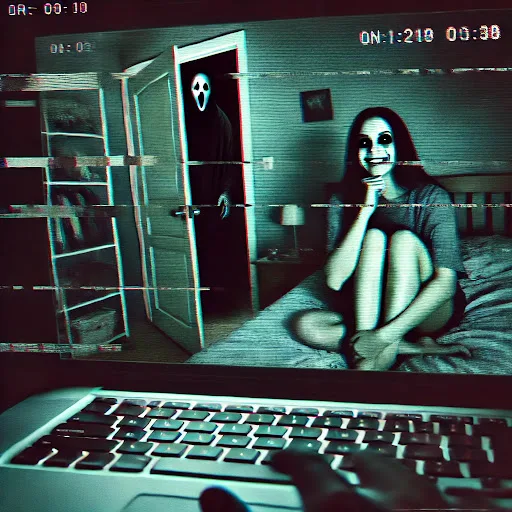
Mira sat in her dimly lit bedroom, eyes glued to her laptop screen. The blue glow reflected off her glasses as she scrolled through the dark corners of the internet. As a cybersecurity analyst, she had seen all kinds of digital horrors—hacked databases, deepfake scandals, and rogue AI gone wrong. But nothing had prepared her for what she was about to encounter.

It started with an email.

Sender: Unknown
Subject: You Shouldn’t Have Looked

Mira frowned. The email contained nothing but a link, a URL that looked like a scrambled mess of characters. She had a strict rule: never click suspicious links. Yet, something about it intrigued her. Curiosity won. She copied the link, ran it through multiple security checks, and found nothing. No malware, no phishing threats—just an empty, anonymous webpage.

Against her better judgment, she clicked.

The screen went black.

Then, a single line of white text appeared:

Hello, Mira.

She shivered. Her system didn’t have any permissions enabled for sites to access her name. How did it know? Before she could react, more text appeared.

You have been chosen.

A distorted audio file began playing—a voice, broken and glitchy, whispering in a language she didn’t recognize. Her speakers crackled as a faint static hiss filled the room.

And then—her screen flickered.

Her webcam light turned on.

Mira's breath caught. She disabled all external access to her camera. Yet, the tiny green light glowed defiantly.

She yanked the USB cord from her external webcam. The light remained on.

The screen flashed again, showing a live feed of her own room—taken from a strange angle. The footage wasn’t from her laptop’s camera. It was from somewhere behind her.

Her heart pounded as she turned slowly.

Nothing.

She grabbed her phone and turned on the flashlight, scanning the corners of her room. Just her bookshelf, her bed, her closet—everything was as it should be.

Then her phone buzzed. A new notification.

Unknown Number: Look Again.

Mira’s hands trembled. She refused to turn back. Instead, she slammed her laptop shut, unplugged it, and powered off her phone.

Silence.

For a long moment, she sat in the dark, listening to her own breathing. She wasn’t paranoid—this was real. Someone had hacked her system. They were watching her. But how?

She forced herself to take deep breaths. This was just another cybersecurity challenge. She had dealt with breaches before. First step: regain control.

She powered her laptop back on.

The screen was different.

No desktop icons. No boot screen. Just a blank black background with one folder labeled: Don’t Open.

Mira swallowed.

A cruel trick. A psychological game.

She opened her command prompt to wipe the system—except it was already running a script. Lines of code scrolled down her screen at rapid speed. She recognized some of it—deep web protocols, cryptographic hashing—but other parts made no sense. It was as if someone had rewritten the very fabric of her operating system.

And then, the folder opened on its own.

Inside was a single video file: Mira.mp4

She hovered over it, debating whether to open it. But before she could decide, the file launched itself.

A grainy, night-vision recording played.

It showed her.

Asleep in her bed.

Mira's pulse hammered in her ears. The timestamp showed it was recorded last night.

She watched as, in the video, her sleeping figure twitched. The blanket moved slightly, as if something unseen was tugging at it. Then, in the footage, she sat up—except she didn't remember waking up.

The recorded version of herself turned toward the camera.

And smiled.

Not a normal smile. A stretched, eerie grin that split her face unnaturally wide. Her eyes were pitch black.

The Mira in the video leaned closer to the camera and whispered in a distorted voice:

"You let me in."

The screen went black.

Mira slammed her laptop shut, her breath ragged.

This wasn’t hacking. This wasn’t a virus.

Something else had entered her system.

Her room felt suffocating, the walls pressing in. She needed to leave. She grabbed her keys and phone, rushing out into the hallway of her apartment complex. The cool air calmed her racing heart.

Her phone buzzed again.

A new message. A video attachment.

She didn’t want to open it.

But her finger moved on its own.

The video showed live footage—her apartment door.

From the inside.

Mira’s blood ran cold.

The camera moved, panning across her empty bedroom, finally stopping in front of her closet.

The door was slightly open. A sliver of darkness beyond it.

And then—

A pale hand reached out.

The screen glitched. The video looped, showing the same scene again and again.

Then, another message appeared.

You can’t run. I’m already here.

The lights in the hallway flickered.

Mira turned, heart pounding, as a shadow moved at the far end of the corridor.

A figure stood there—its face just like hers.

It smiled.

The last thing Mira heard before everything went dark was her own voice whispering:

"You shouldn’t have looked."

Tuesday, March 25, 2025

The Paradox of Life


In the quiet village of Sitapur, nestled between the hills and the river, lived an old man named Baba Ramesh. He was known for his wisdom, though he owned nothing but a small hut and a few clay pots. People from far and wide came to seek his advice, for he had a way of turning life’s troubles into lessons.

One day, a wealthy businessman named Arjun Mehta visited Baba Ramesh. Arjun was troubled despite his riches.

“Baba,” Arjun said, “I have everything—money, power, and success. But I am not happy. Life feels empty.”

Baba Ramesh smiled and asked, “What do you seek in life?”

“Happiness, peace, and purpose,” Arjun sighed.

Baba Ramesh nodded. “I will tell you a story.”

The Two Travelers

“Once, two travelers set out on a journey to the same destination—a beautiful valley said to hold the secret of life. One was a rich man, the other poor.

The rich man rode a fine horse, carrying food, gold, and a map. The poor man had nothing but a walking stick.

On the way, a storm struck. The rich man sought shelter in a cave, fearing the storm would ruin his silk clothes. The poor man walked through the rain, feeling the water on his skin, tasting its freshness.

When they reached the valley, the rich man was exhausted and irritated. His food had spoiled, and his gold was heavy to carry. The poor man, however, arrived with nothing but a heart full of joy, having embraced every moment of the journey.

Both reached the same place, but only one truly lived the journey.”

Arjun frowned. “Are you saying my wealth is useless?”

Baba Ramesh chuckled. “Not at all. Wealth is like the horse—it can make your journey easier, but if you hold on too tightly, it can also weigh you down.”

The Paradoxes of Life

Arjun was thoughtful. “So, what is the secret to happiness?”

Baba Ramesh picked up a clay pot and filled it with water. Then, he overturned it, letting the water flow away.

“Life is a paradox, Arjun. The more you try to hold on to things—money, power, even happiness—the more they slip away. But when you let go, when you give, life fills you with abundance.”

Arjun was silent, absorbing the lesson.

Baba Ramesh continued:

“To find yourself, you must lose yourself in service to others.”

“To gain respect, you must be humble.”

“To be strong, you must accept your weaknesses.”

“To be truly free, you must let go of control.”


The Final Lesson

Arjun stayed with Baba Ramesh for a few days, observing his simple life. Despite having little, the old man smiled more than anyone he had ever met.

One evening, Arjun asked, “Baba, if life is about letting go, should I give away all my wealth?”

Baba Ramesh laughed. “No, my son. Wealth is not the problem. Attachment is. If you can own riches without them owning you, you are free.”

Arjun finally understood. He returned to his city, but he was no longer the same man. He worked, earned, and helped others, realizing that true joy came not from what he had but from how he lived.

And so, he found what he had been searching for all along—not in his wealth, but in his wisdom.

Monday, March 24, 2025

Villains Are Created, Not Born


The courtroom was silent as the judge read the verdict. The air was thick with judgment, anger, and betrayal. Raghav, a 28-year-old man, stood in the defendant’s box, accused of multiple crimes. He showed no remorse, his cold eyes scanning the crowd. His mother sat in a corner, tears streaming down her face.

The media had already painted him as a monster. “A born criminal,” they called him. But no one asked why. No one cared about the boy he once was, the struggles he faced, or the wounds society inflicted upon him.

The Innocence That Once Was

Raghav was not always a criminal. He was once a bright, hopeful child. He loved books, enjoyed painting, and dreamed of becoming a teacher. His father, a laborer, worked tirelessly to provide for the family, but money was always scarce. His mother, a kind woman, tried to shield him from the hardships of life.

One evening, when he was ten, his father met with an accident at the construction site where he worked. The company refused to take responsibility, and his family was left helpless. Within weeks, his father passed away, leaving them in crushing poverty. His mother worked as a maid, struggling to feed him.

The world, however, was not kind to poor children. His classmates mocked his tattered clothes. The shopkeepers shooed him away as if he were a thief. When he walked past the rich neighborhoods, people clutched their wallets tightly, as if his mere presence threatened them.

He never understood why society looked at him with disgust. Did he choose to be poor? Did he deserve this cruelty?

The First Crack in His Soul

One night, his mother fell ill. She needed medicine, but they had no money. Desperate, he approached a local shopkeeper for help. The man laughed. “If you want money, earn it like the rest of us,” he sneered.

Helpless, Raghav did something that changed his life forever—he stole. It was a small act, just a strip of medicine, but when he was caught, the entire neighborhood branded him a thief. No one listened to why he did it. They didn’t see a desperate boy, only a criminal in the making.

Soon, people stopped giving his mother work. He was expelled from school. The world had decided—he was a villain, even before he knew what it meant.

Falling Into Darkness

Thrown into the streets, Raghav had no choice but to survive. He met others like him—children abandoned by society, rejected and scorned. They taught him the rules of the street: steal or starve, fight or perish.

At first, his hands trembled when he picked a pocket. But with time, he hardened. When people treated him like a criminal, he became one. The world only respected the powerful, so he vowed never to be weak again.

By the time he turned eighteen, he was no longer just a petty thief. He had joined a local gang. They offered him protection, food, and most importantly—respect. He climbed the ranks, learning that power came not from kindness, but from fear.

A Monster of Society’s Making

One night, he saw the same shopkeeper who once humiliated him, now old and weak. The man, who once denied him medicine for his dying mother, now begged for mercy as Raghav’s gang raided his store.

For a moment, the innocent boy inside Raghav surfaced. He wanted to forgive. He wanted to help. But then, he remembered the hunger, the insults, the years of rejection. He hardened his heart and walked away, leaving the man to his fate.

By the time the police caught him, he was beyond redemption in society’s eyes. No one remembered the boy who once dreamed of becoming a teacher. No one cared about the pain that shaped him.

The Final Judgment

As the judge pronounced the life sentence, the courtroom erupted in whispers. Some called it justice. Others felt relieved. But no one questioned how a bright, kind boy had turned into a feared criminal.

As Raghav was led away, he looked at his mother one last time. Her eyes were filled with sorrow, not just for him, but for the world that had failed him.

Villains are not born. They are created by the cruelty, neglect, and injustice of society. If we had listened, helped, and shown kindness, maybe Raghav’s story would have been different. But now, it was too late. Society had made its monster, and now it wanted to erase him.

Friday, March 21, 2025

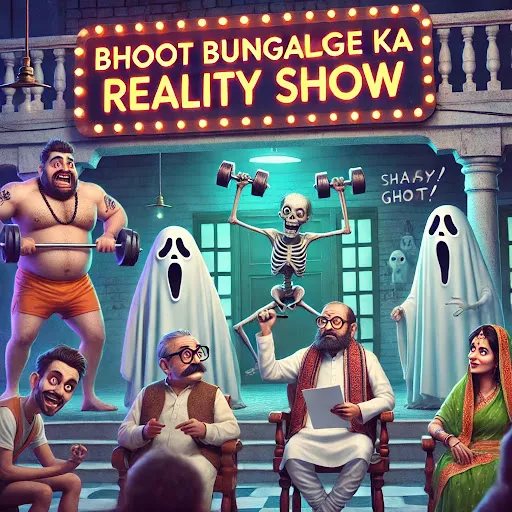
Bhoot Bungalow ka Reality Show


After their YouTube channel Bhoot Bungalow ka WiFi became a massive hit, Ramesh had a crazy idea—India’s first ghost reality show!

“Bhai, agar insaan Bigg Boss dekh sakte hain, toh bhoot bhi dekh sakte hain!” he told Suresh.

With Narayan the foodie ghost, Raghunath Mishra the professor ghost, and their landlord-turned-ghost sponsor, they launched Bhoot Bungalow ka Reality Show, a haunted house competition where ghosts had to survive challenges—without vanishing into thin air!

The Contestants

1. Narayan Bawarchi – The ever-hungry ghost, who haunted the kitchen.


2. Raghunath Mishra – The strict professor ghost, who haunted the study room.


3. Champa Aunty – A gossip-loving ghost from the 1800s, who still believed in matchmaking.


4. Colonel Zalim Singh – A headless army ghost who took PT drills very seriously.


5. Tiwari Baba – A tantrik-turned-ghost who still tried to exorcise others.


6. Phirki Bai – A lost-at-Kumbh-Mela ghost who kept mistaking everyone for her family.


Episode 1: The Grand Haunting Entrance

The show began with a dramatic introduction. Ramesh, dressed like a cheap Bollywood horror movie host, welcomed everyone.

"Yeh hai duniya ka pehla bhoot reality show, jisme contestants bina darwaza khole andar aate hain!"

The ghosts phirrrr floated inside, except Colonel Zalim Singh, who shouted, "Jai Hind!" and marched in.

Champa Aunty immediately started interrogating Narayan. “Beta, shaadi ho gayi ya abhi bhi ladkiyon ke DMs me ghoom raha hai?”

Narayan groaned, “Aunty, main bhoot hoon, online dating app pe bhi nahi hoon!”

Meanwhile, Tiwari Baba attempted to exorcise Phirki Bai, chanting mantras. Phirki Bai smacked him with a floating chappal. “Arey baba, main bhoot hoon, tu bhi bhoot hai! Kya exorcism kar raha hai?”

Episode 2: The First Task – Scare the Human

The first challenge was simple: Scare the human guest, Manoj Pandey, a brave but confused real estate agent.

Narayan tried throwing floating samosas at Manoj, but instead of getting scared, he took a bite and said, "Mast hai!"

Raghunath Mishra whispered "Teri CBSE answer sheet galat check hui thi", which made Manoj faint.

Colonel Zalim Singh shouted, "Front roll, back roll!" and made Manoj do PT for an hour.


Winner: Raghunath Mishra, because exam trauma is the real horror.

Episode 3: The Midnight Kitchen Battle

Since ghosts don’t need sleep, a fight broke out in the kitchen at 2 AM. Narayan wanted to make paneer butter masala, but Champa Aunty demanded kadha for her "bhoot ki immunity".

Phirki Bai, in her usual confused state, took out salt instead of sugar, ruining the ghostly tea. Tiwari Baba tried to purify the meal by throwing holy water on it, causing everyone to poof disappear for five minutes.

The midnight kitchen was declared a disaster.

Episode 4: The Diary Room Confessions

Just like every reality show, contestants had to enter the "Diary Room" to share their feelings.

Narayan: “Mujhe sirf ek plate chicken biryani chahiye, phir main elimination se khud nikal jaunga.”

Champa Aunty: “Yahan ladkiyon ka koi future nahi hai. Saare ladke ya toh bhautiko hai ya Colonel jaise pagal!”

Colonel Zalim Singh: “Mujhe ek laddu chahiye, phir main army se resign kar dunga.”

Phirki Bai: “Koi mujhe bata sakta hai, main yahan kyun hoon?”


The Grand Finale: The Ultimate Scare Battle

The last challenge was to scare Mohanlal the Milkman, a man known for his fearlessness.

Narayan turned into a floating samosa. No effect.

Raghunath Mishra whispered, "Beta, school ki fees double ho gayi hai," but Mohanlal laughed.

Tiwari Baba chanted “Shakti aayi hai, chali jayegi!” but Mohanlal just said, "Baba, aap retire ho jao."

Colonel Zalim Singh, tired of everything, removed his own head and said, “Doodh ka bill nahi diya toh sirr kaat dunga!”


Mohanlal screamed and ran.

Winner: Colonel Zalim Singh!

The Prize?

Instead of money (because, well, ghosts), Colonel got one year’s supply of free laddus and the title "Bhoot Bungalow ka Boss".

Final Scene: As the ghosts celebrated, Ramesh turned to Suresh and whispered, "Bhai, agla season mein aliens bulayein?"

And thus, Bhoot Bungalow ka Reality Show became a legend—where horror met comedy, and ghosts fought for the ultimate prize: attention and food!

Nova Quest: The Game That Played Back

        It was just another lazy summer evening when thirteen-year-old Kian and his ten-year-old sister Mira stumbled upon the old board gam...